
Summary
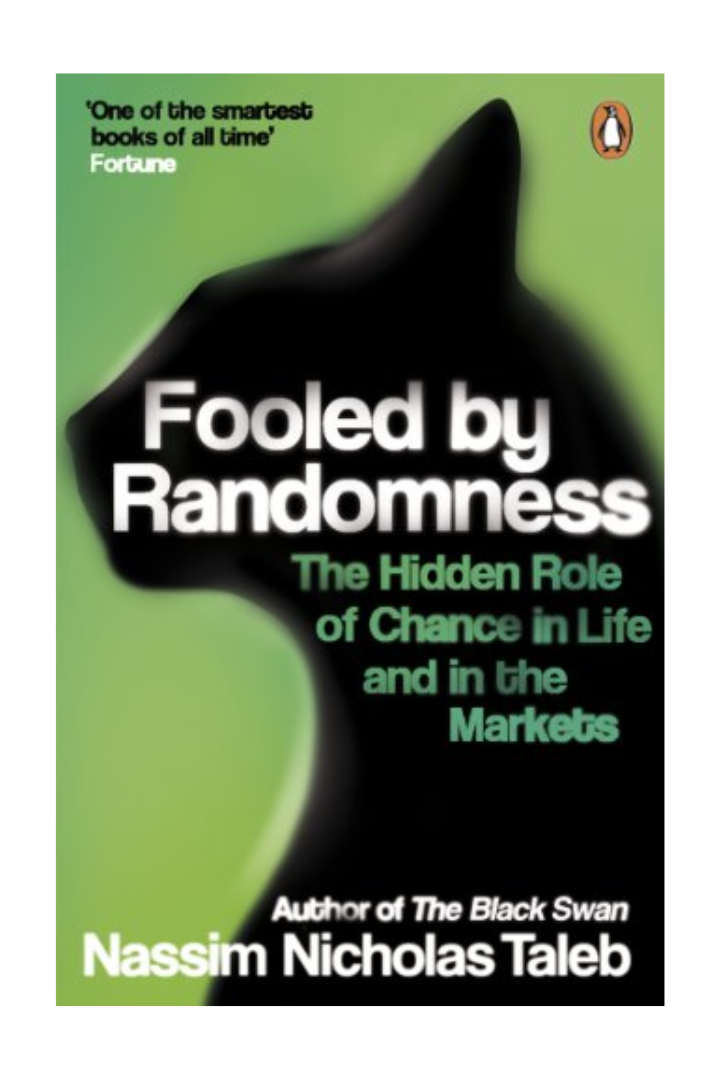
Fooled by Randomness by Nassim Nicholas Taleb explores how luck and randomness shape success more than skill or intelligence. Taleb argues that people mistake chance for causality, overestimate patterns and underestimate uncertainty. The book urges skepticism, humility and awareness of randomness in interpreting success, failure and life’s outcomes.
Ratings
Quote
A mistake is not something to be determined after the fact, but in light of the information available until that point.
Learnings
- Success often comes from luck, not skill: Many people attribute success to talent or strategy when it may simply be the result of rare luck.
- Past performance doesn’t guarantee future results: Historical success can be misleading if luck played a major role; randomness can turn winners into losers overnight.
- True skill shows in consistency across randomness: Skilled decision-makers perform well not just in good luck but also under adverse or random conditions.
Review
Fooled by Randomness reshaped how I see success, luck and decision-making. Taleb’s insights are sharp, humbling and deeply thought-provoking. I loved how he exposes our illusion of control and celebrates probabilistic thinking. It’s a book that made me wiser, more skeptical and genuinely fascinated by uncertainty in life.
Audience
- Investors, traders and finance professionals: The book is discussing how people often mistake luck for skill (e.g. a fund manager appears successful but it might be statistical noise).
- Business leaders & entrepreneurs: The lessons on randomness, uncertainty and the limits of prediction are applicable beyond finance — in business strategy, innovation and risk management.
- Academics interested in critical thinking: The book is non-technical (so accessible) but covers profound ideas about probability, induction, uncertainty and human bias.