
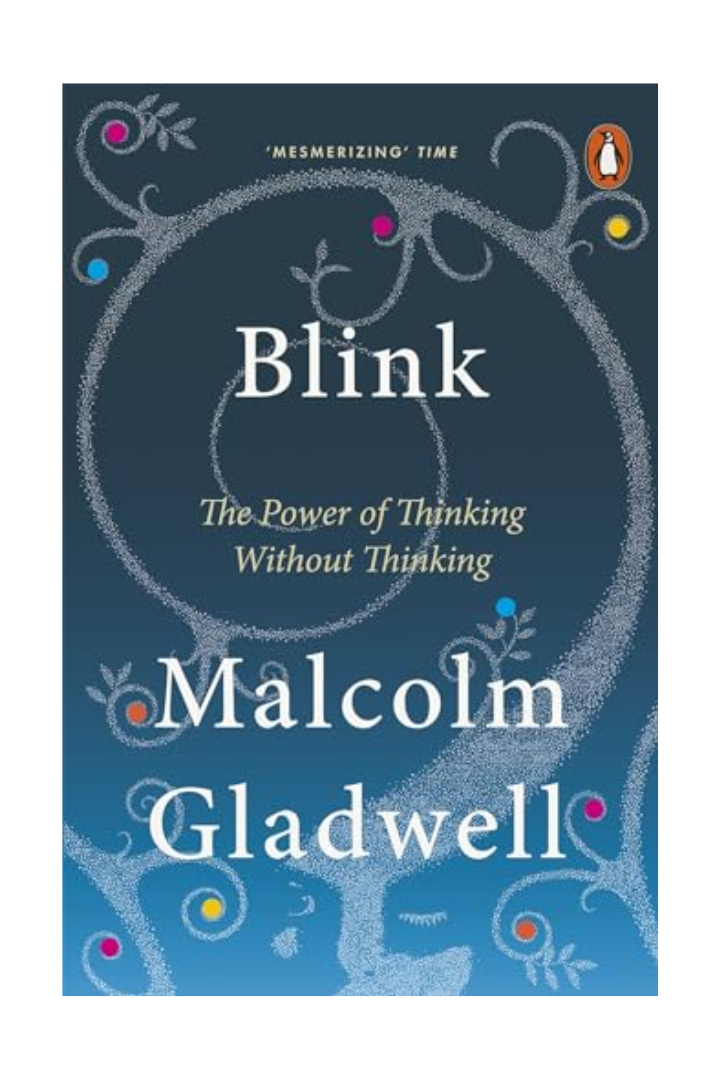
Summary
Blink explores how rapid, unconscious judgments can be surprisingly accurate. Malcolm Gladwell explains the science behind intuition, showing when snap decisions outperform deliberate analysis. The book highlights thin-slicing, biases and the conditions that make quick thinking powerful—or dangerously flawed—encouraging readers to trust instincts wisely.
Ratings
Quote
The key to good decision making is not knowledge. It is understanding.
Learnings
- Too much information can harm decision quality: More data doesn’t always lead to better decisions. Gladwell shows how instinctive judgments can outperform exhaustive analytical thinking.
- Bias shapes rapid thinking: The unconscious mind can be influenced by stereotypes, priming, and emotional cues.
- Thin-slicing can be extremely powerful: We often make accurate decisions based on limited information. The brain can evaluate patterns unconsciously and rapidly.
Review
Blink captivated me with its fresh perspective on intuition and rapid cognition. Gladwell brilliantly shows how snap judgments can be powerful and surprisingly accurate. I found the examples compelling, the writing engaging and the insights highly practical. This book genuinely deepened my appreciation for instinctive decision-making.
Audience
- Business & Leadership Professionals: Managers, executives, product leads, and consultants who rely on quick judgments and reading situations efficiently.
- Psychology & Behavioral Science Enthusiasts: Students, researchers and anyone fascinated by cognitive biases, subconscious reasoning and how the brain processes information rapidly.
- Marketers & Sales Specialists: People in marketing, branding, UX, and persuasion-focused industries who want to understand how first impressions shape choices and behaviour.